
Case study · Chapelhall, North Lanarkshire
Waterlogged lawn dug out and returfed in Chapelhall, North Lanarkshire
A back lawn that kept flooding, dug out with a mini digger, levelled and laid with new turf for a retired council tenant over two visits.
Chapelhall, North Lanarkshire
Waterlogged lawn dug out and returfed
A back lawn that kept flooding, dug out with a mini digger, levelled and laid with new turf for a retired council tenant over two visits.
Read the case studyAt a glance
The job in short
- Location
- Chapelhall, North Lanarkshire
- Property
- Council house, rear garden
- Problem
- Lawn repeatedly flooding and waterlogged
- Work
- Dig out, level and returf
- Machinery
- Mini digger for the dig-out
- Timescale
- Monday start, finished Wednesday
Why the job came about
The tenant here is retired and had been living with a back garden that flooded. Every spell of heavy rain left water lying across the lawn, and between the wet spells the grass never properly recovered. He reported it to the council, the council agreed the lawn should be replaced with new turf, and the job was passed to us to carry out.
For the tenant it was an important piece of work. A back garden that floods is not just untidy. It is a garden you cannot use or walk across safely, and for someone who is at home most of the day, it is the view out of the back door. Getting it right mattered more than the size of the job might suggest.
What the lawn looked like before
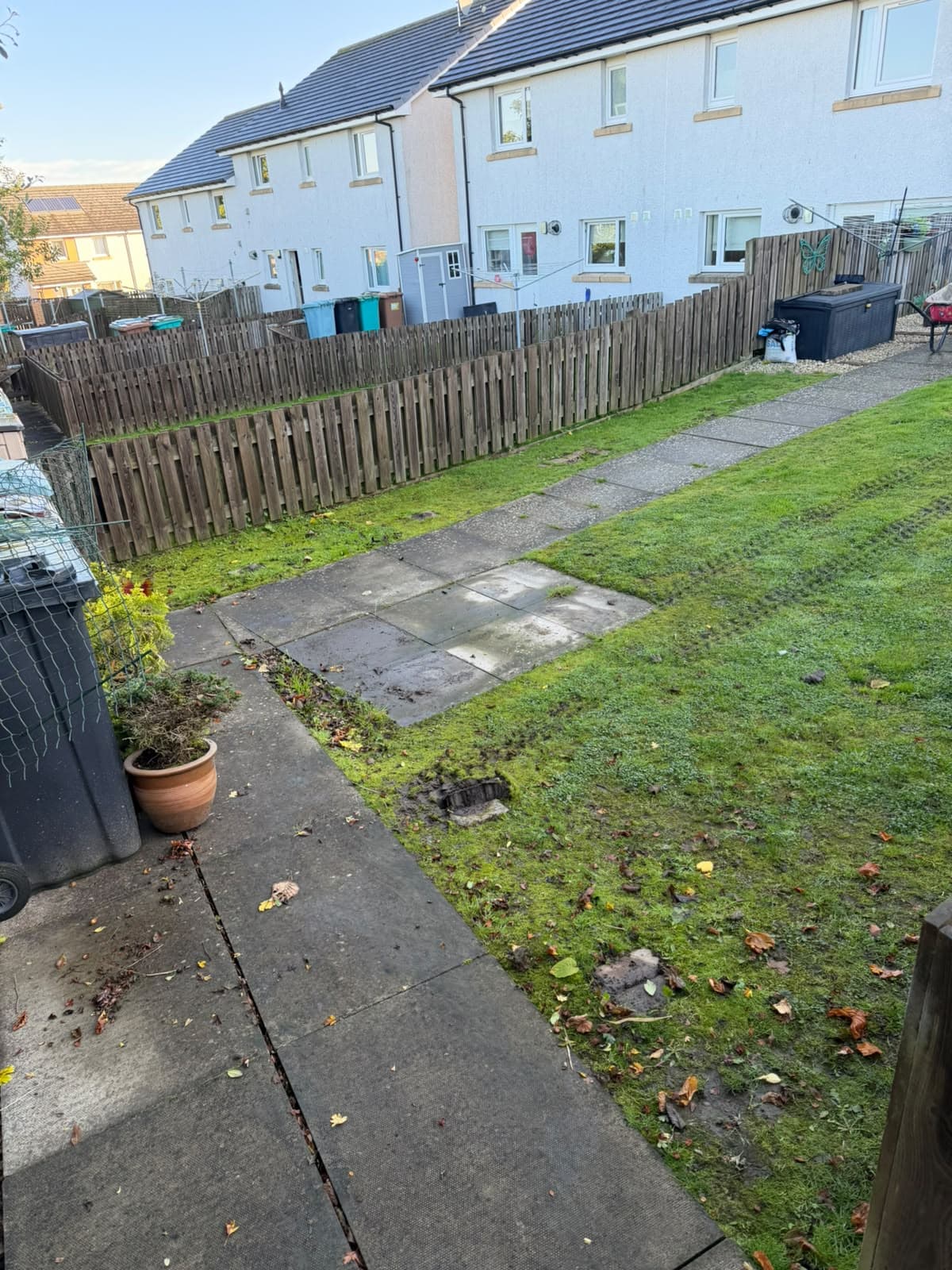
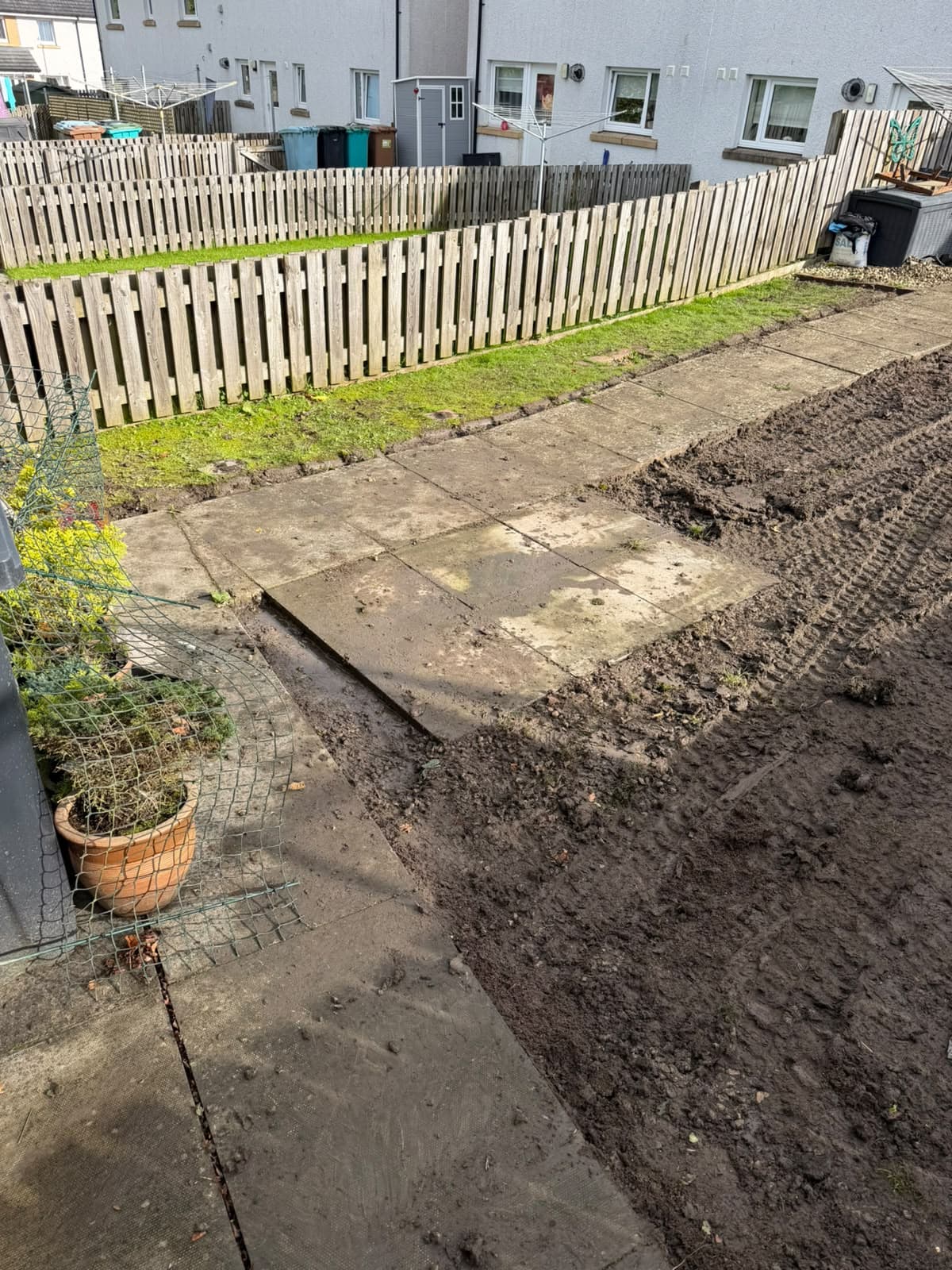
The photographs taken on the first morning show a lawn that had been wet for a long time. The surface was more moss than grass across much of it, with thin, flattened growth and soft ground that took an impression from anything that crossed it. Access chambers sat in the lawn with the ground around them sunk and muddy.
That pattern is typical of a lawn that holds water. Grass roots need air as well as moisture, and in ground that stays saturated they die back near the surface. Moss moves into the gaps because it copes with wet, compacted conditions far better than grass does. Once that happens, feeding and scarifying do very little, because the ground underneath is the problem rather than the grass on top of it.
This is a common picture on estates across North Lanarkshire, where gardens sit on heavy clay subsoil that drains slowly and where the topsoil on top of it is often shallow.
Digging it out
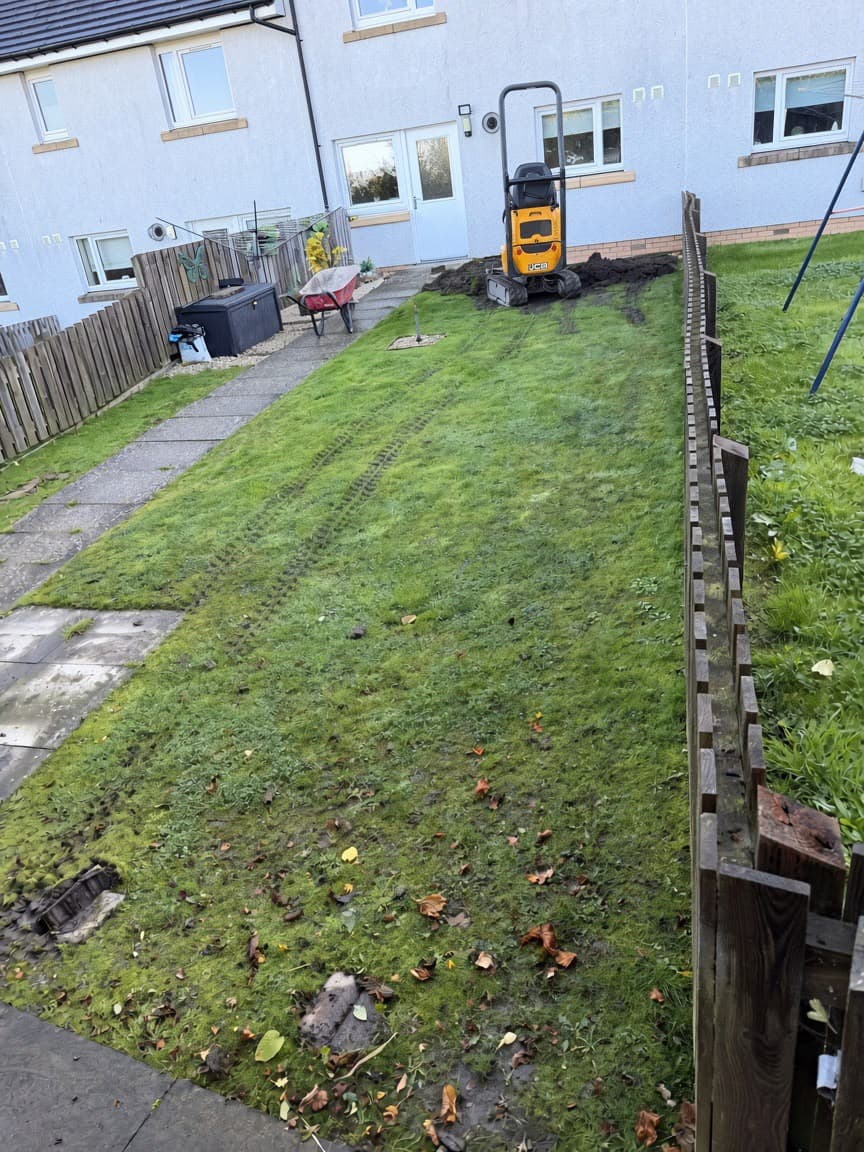
On a lawn in this condition there is no point laying new turf over the old one. The tired, mossy layer and the compacted ground immediately under it were dug out with a mini digger. On a garden of this length, doing the dig-out by machine is far quicker than digging by hand, and it takes the ground down evenly across the whole area.
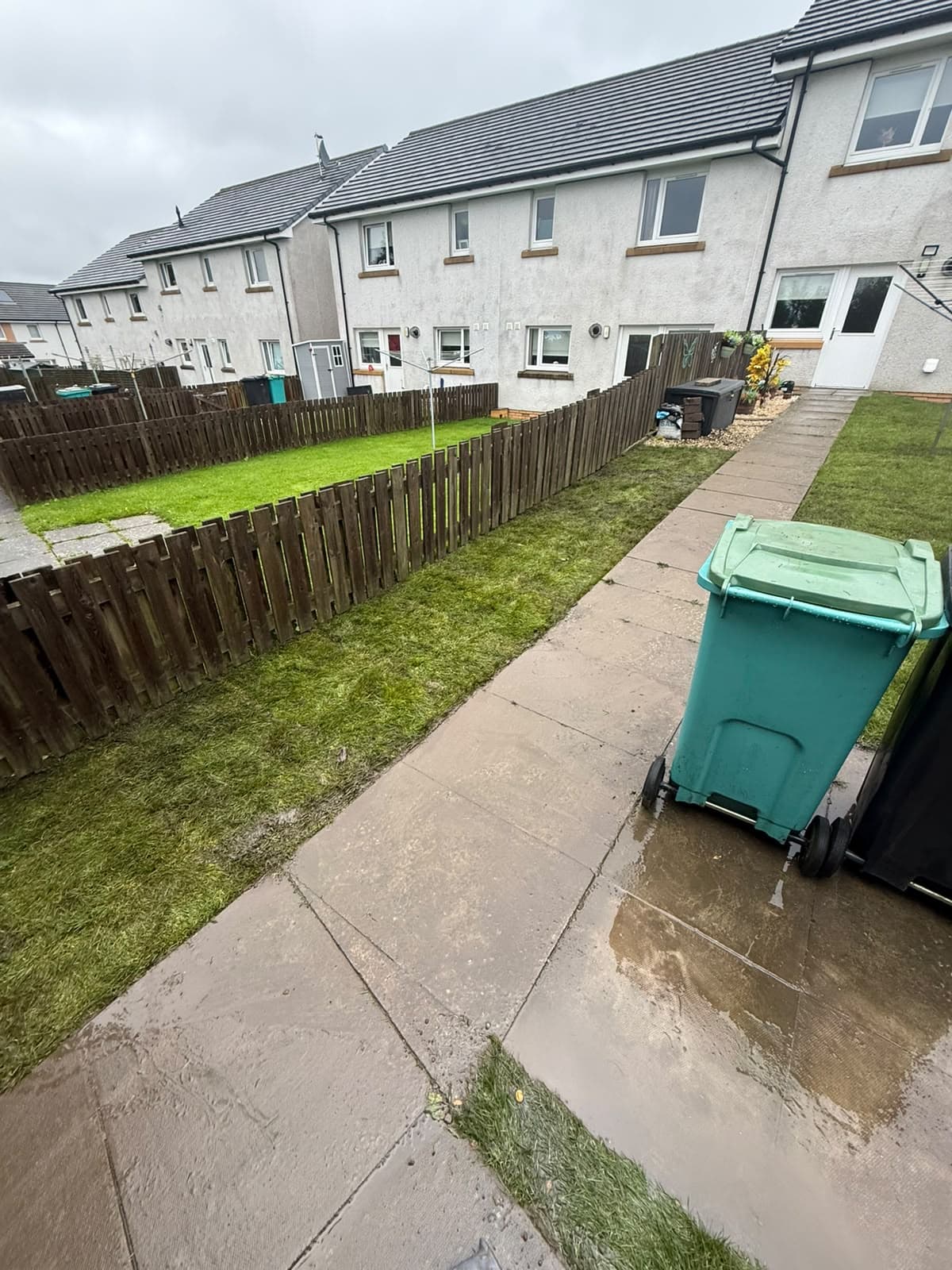
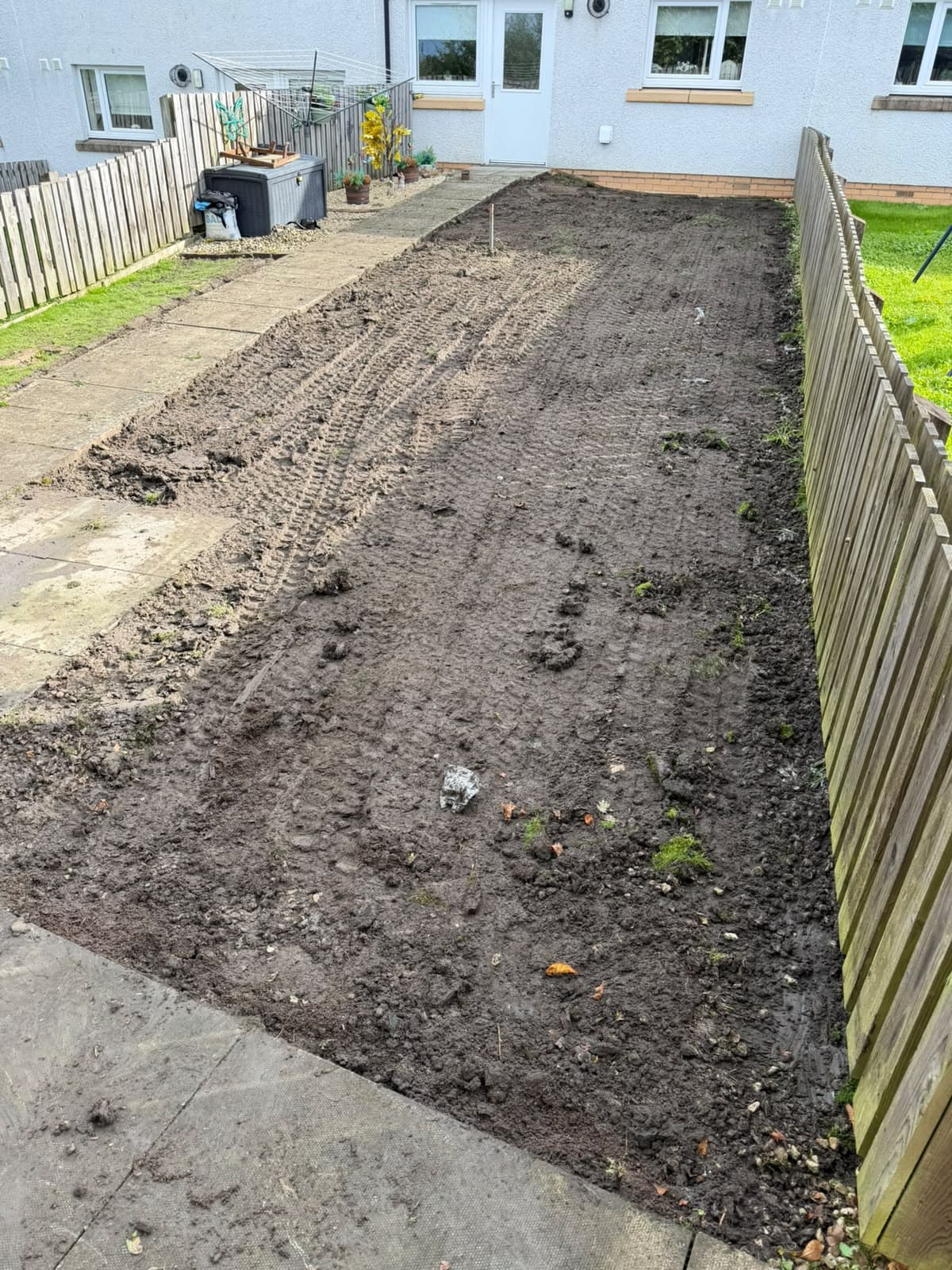
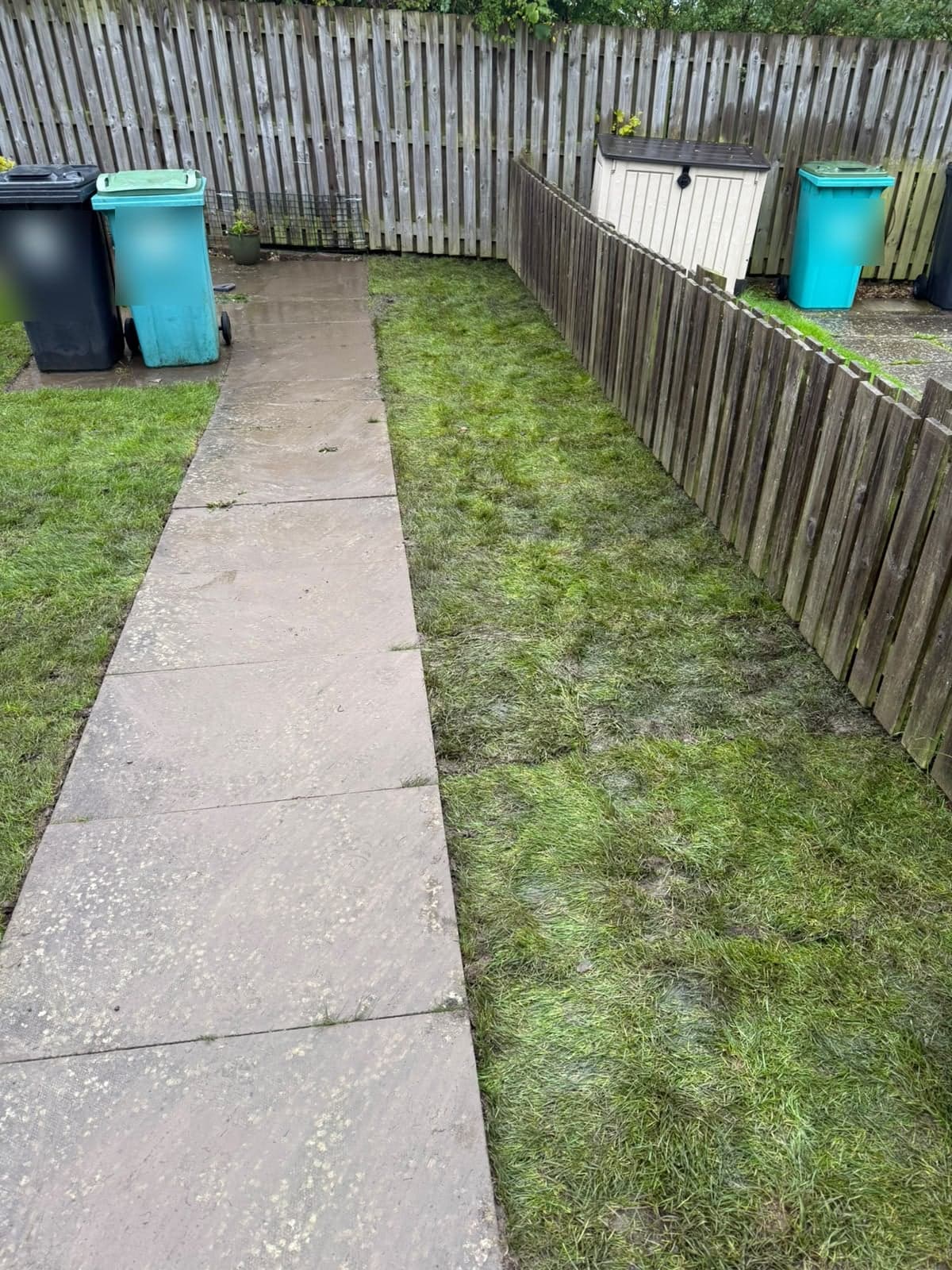
The mid-job photographs show the garden at that stage: bare soil from the path to the fence, with the old lawn gone. One of them also shows exactly why the work was needed. Along the edge of the slab path, water was lying in the dug ground within hours of it being opened up. That is the ground telling you where the water sits.
With the old surface removed, the ground was graded and raked out to a level, working off a marker peg so the finished lawn would fall evenly rather than leaving the low spots where water had been gathering before. The finished level was kept flush with the path slabs, so the lawn edges meet the paving cleanly and water can run off rather than being held against a lip.
Laying the new turf
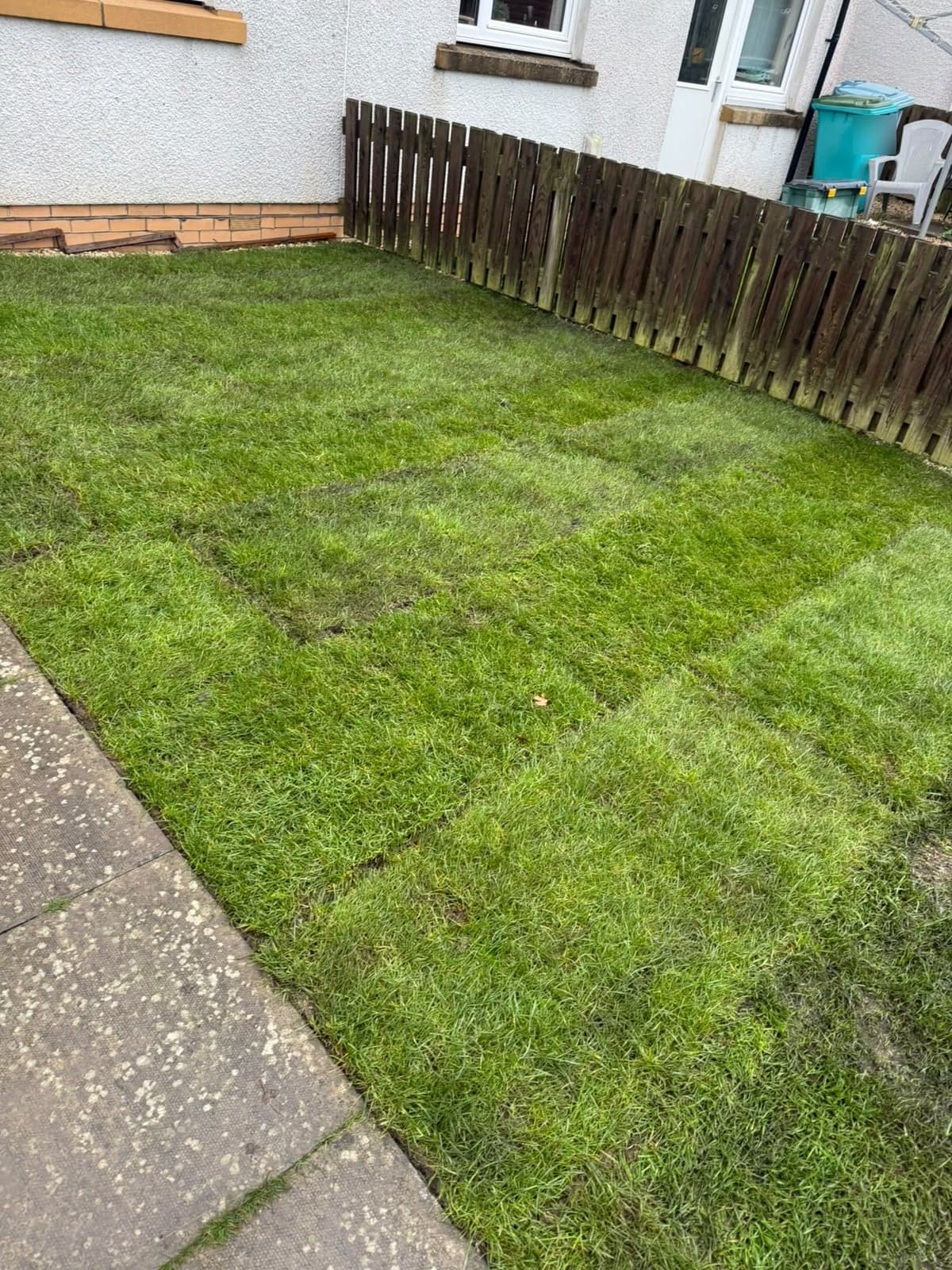
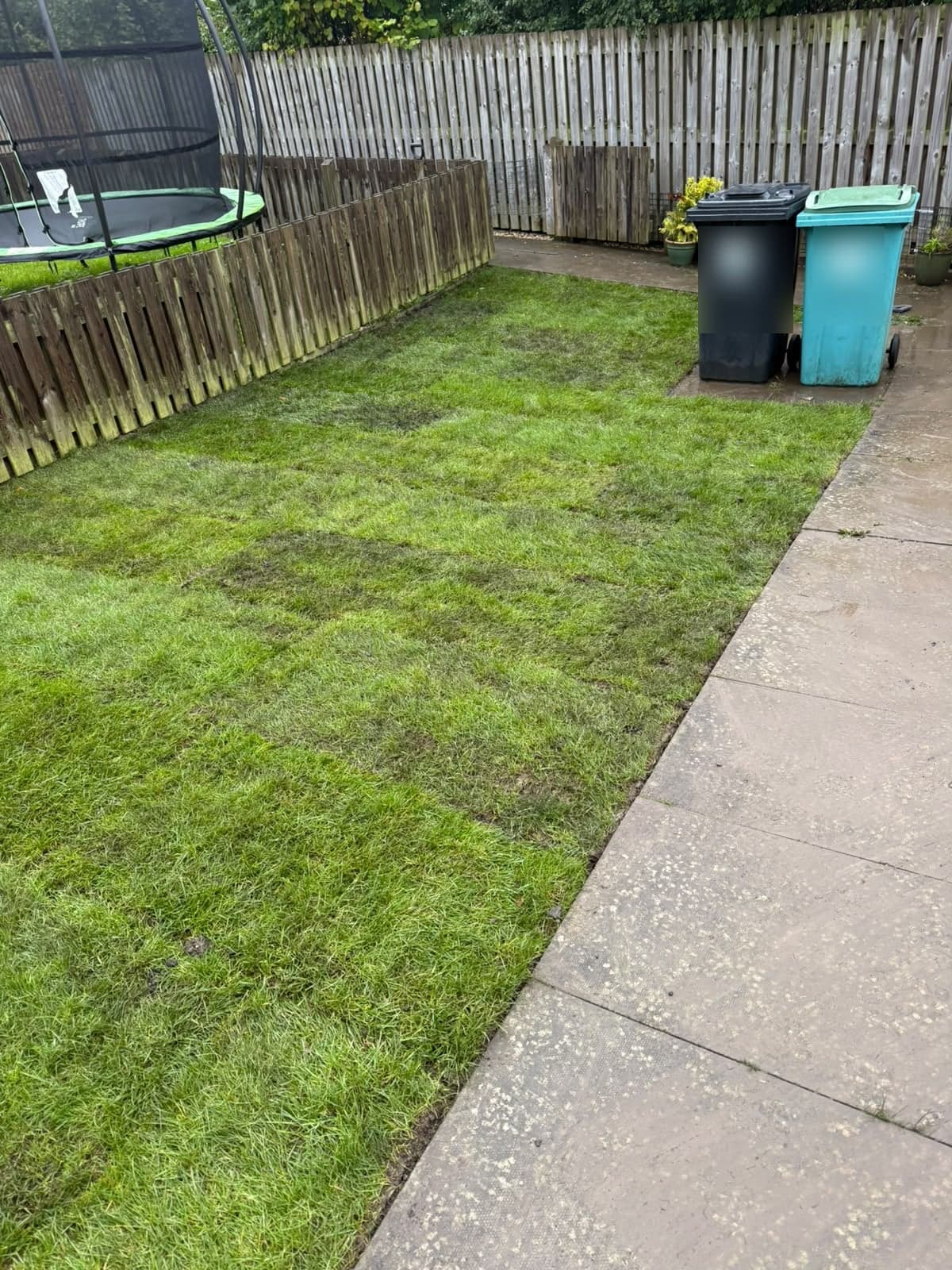
The new turf went down on the prepared ground with the joints staggered like brickwork, so no seam runs straight across the lawn. Each roll was butted tight to its neighbours and cut in neatly along the path, around the rotary drier and against the fence line.
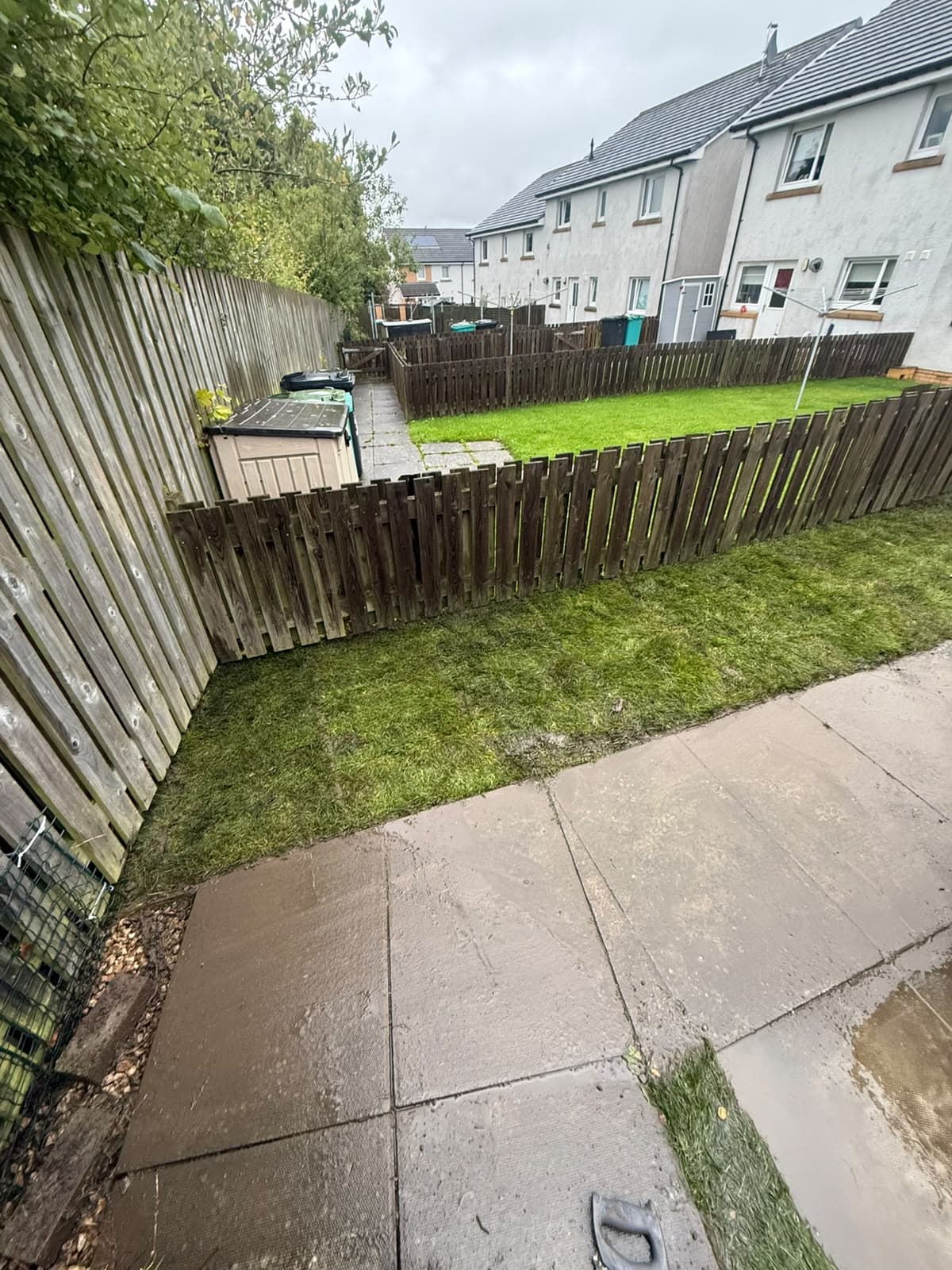
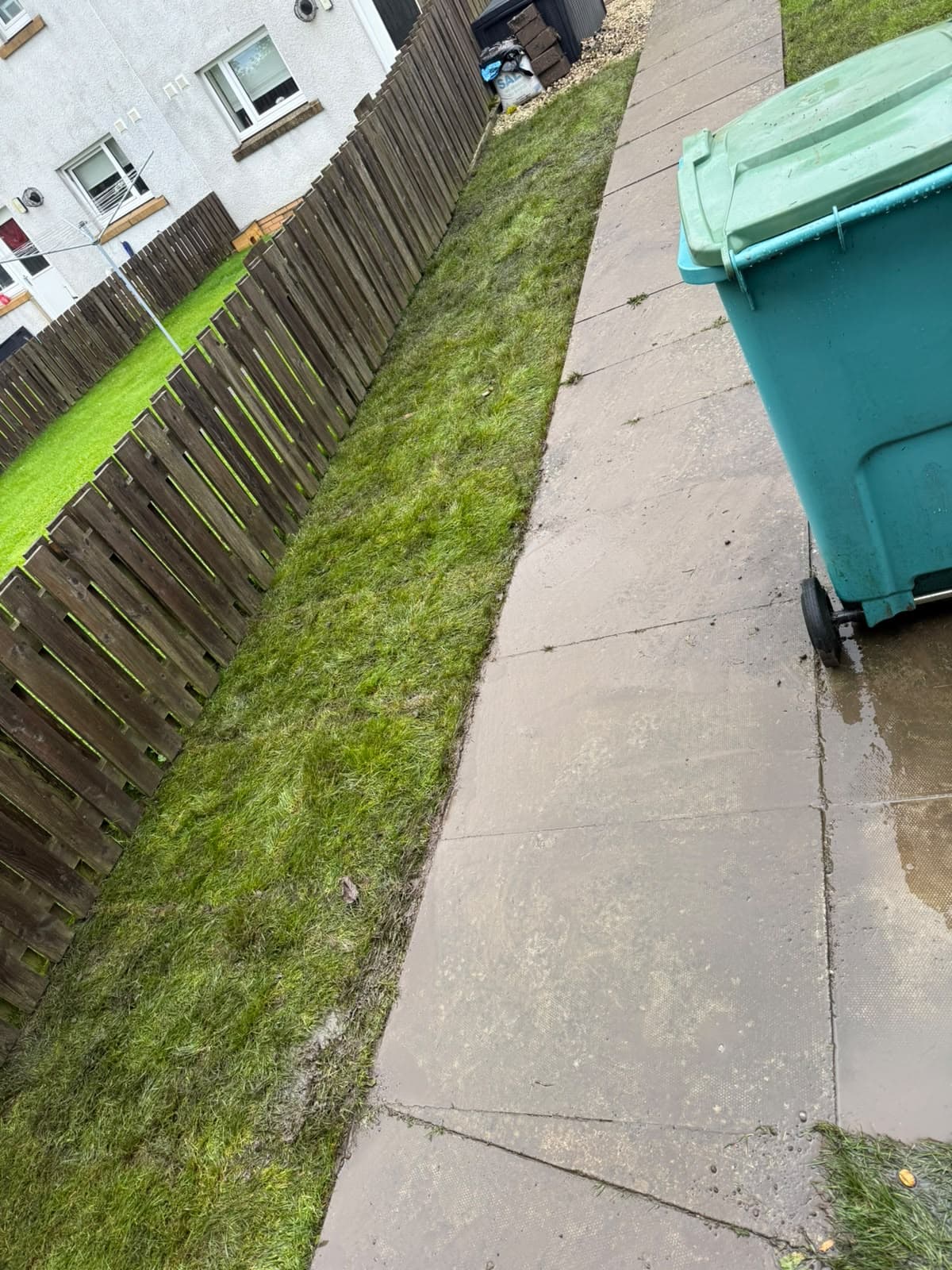
The main lawn was dug out and turfed on the Monday. The smaller strip on the other side of the path was finished on the Wednesday, so the whole of the back garden now has new grass rather than one half looking new beside the other half still waterlogged.
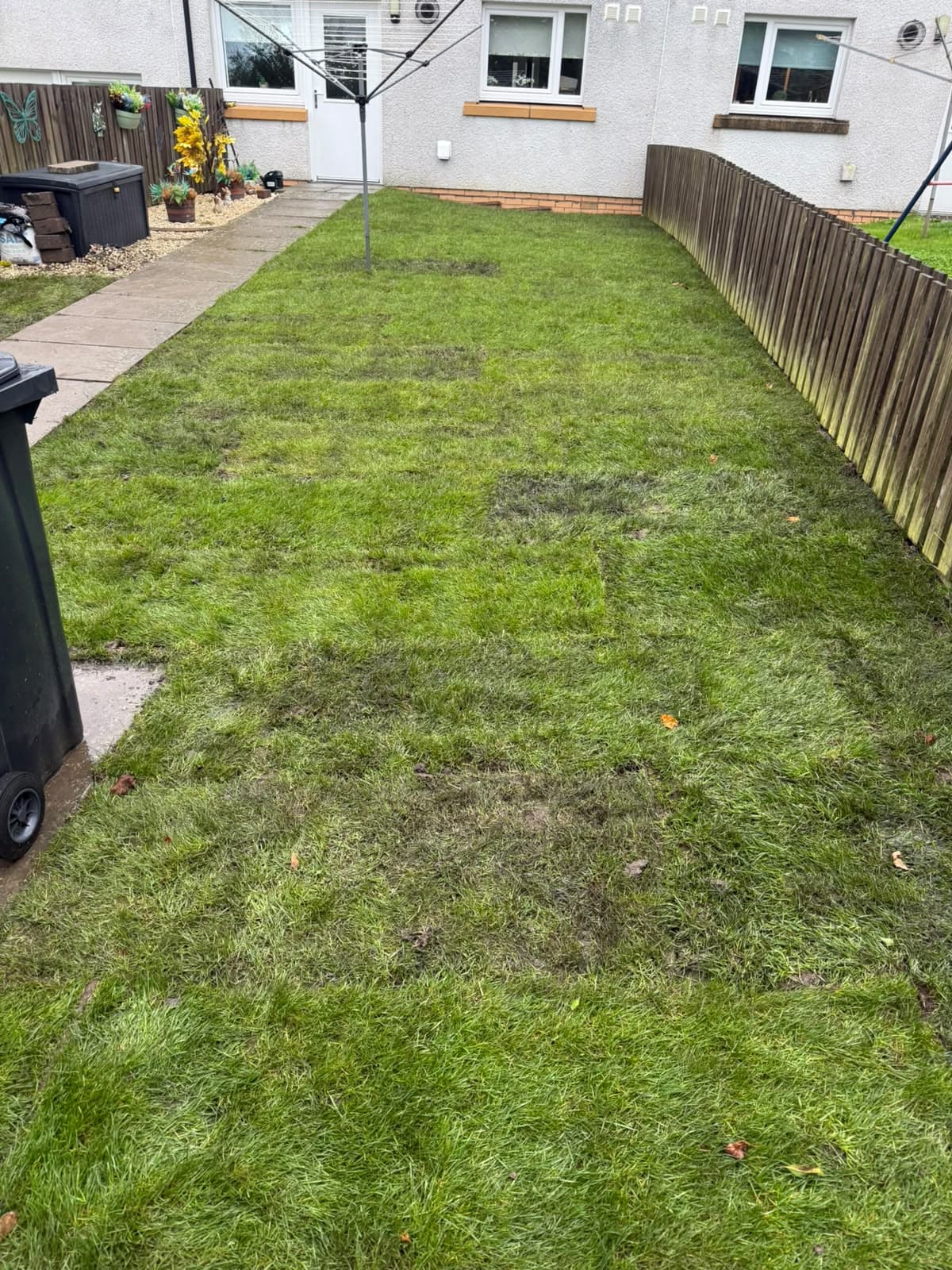
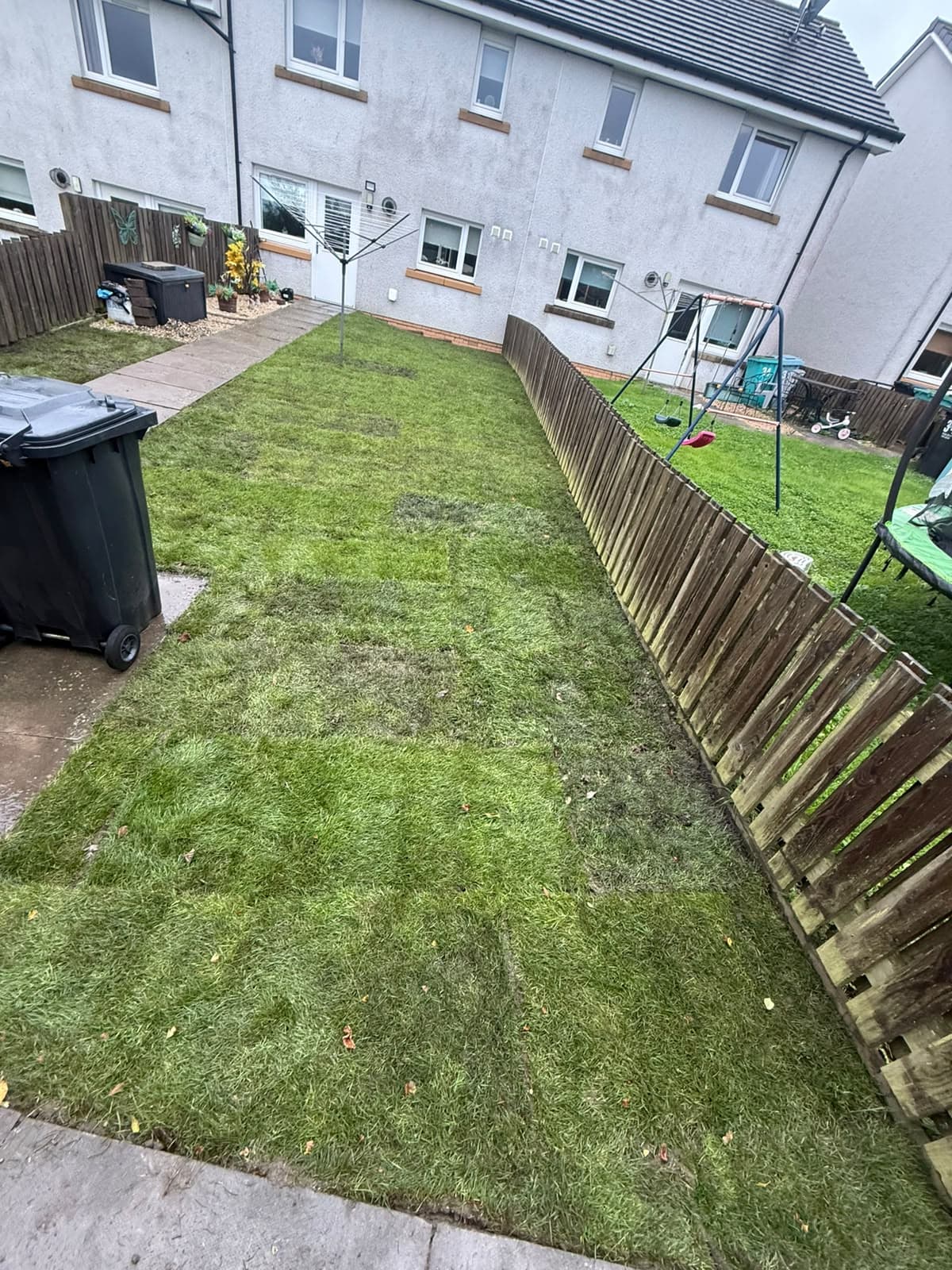
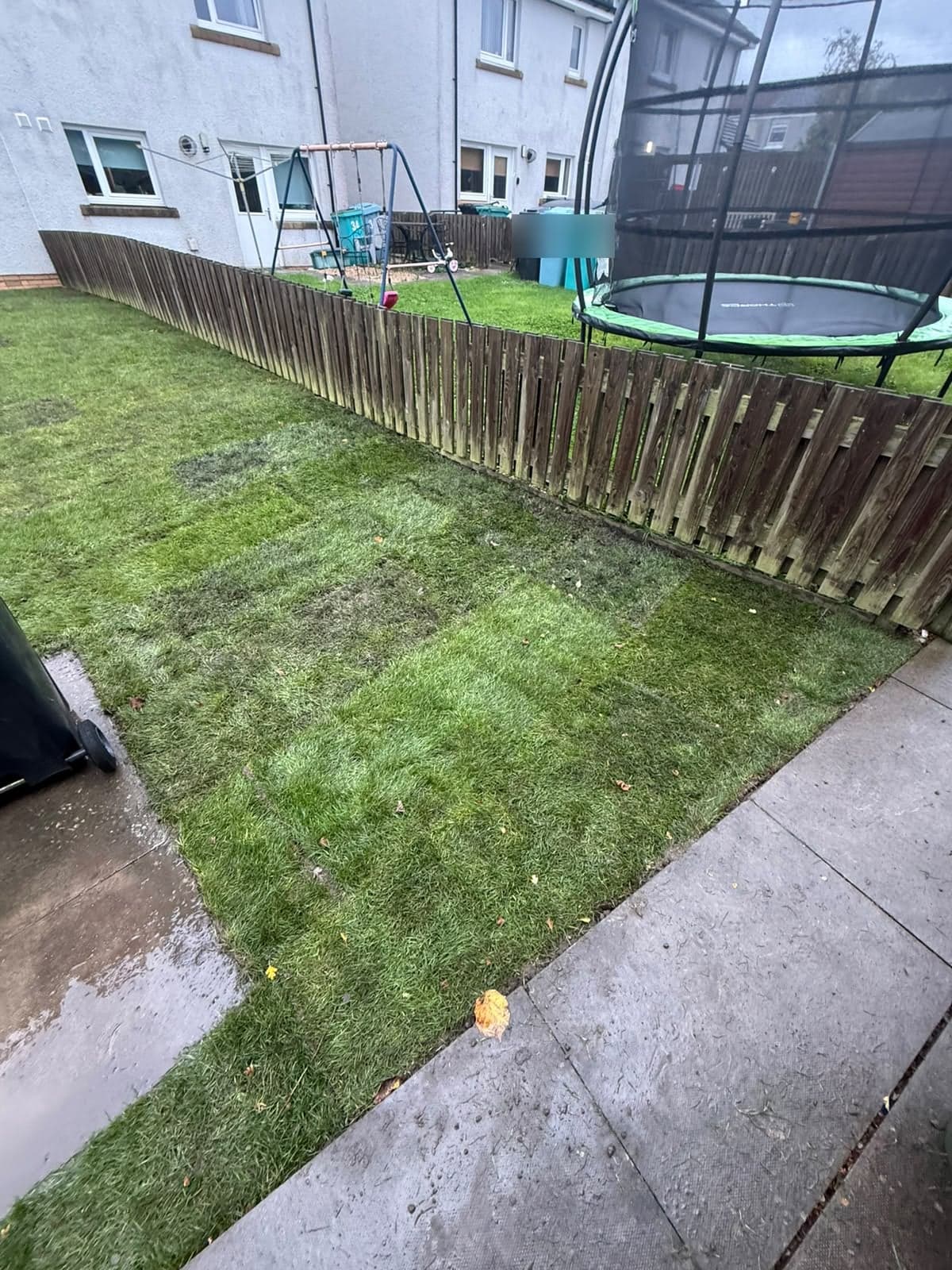
In the finished photographs the turf shows some variation in colour between rolls, and a few joints are still visible. That is normal for turf in its first week or two. It evens out once the roots knit into the ground below and the lawn has had its first couple of cuts.
The finished garden
The tenant now has a level, green lawn from the back door to the boundary, on ground that has been dug out and regraded rather than patched. The slab path is clear and clean on both sides, and the garden is somewhere that can be walked across again.
Laying turf at the end of September is good timing in the west of Scotland. The soil is still warm enough for the roots to establish, and there is enough rain that the new lawn is unlikely to dry out, which is the most common reason new turf fails in a summer install.
All of the old turf and the spoil from the dig-out were taken away, and the paths were cleaned down before we left.
Materials used
- Mini digger for the dig-out
- Fresh cultivated lawn turf
- Ground graded and raked to level before laying
- Old turf and spoil removed from site
Photographs from the job
Questions about work like this
Will new turf stop a garden from flooding?
It depends on why the garden floods. Where the problem is a compacted, mossy surface and low spots that hold water, as it was here, digging out the old lawn, regrading the ground and returfing makes a real difference. Where the cause is a blocked drain, a high water table or water running in from higher ground, turf alone will not solve it and drainage work is needed as well. That is assessed on site before anything is recommended.
Why dig out the old lawn instead of laying turf on top?
Turf laid over a failed lawn sits on the same compacted, waterlogged layer that killed the grass in the first place. The new roots cannot get down into it, and the lawn goes the same way within a season or two. Removing the old surface and working the ground below is what gives the new turf something to root into.
When can you walk on new turf?
Light foot traffic is fine after two or three weeks, once the turf has started to root and you can no longer lift a corner easily. It should get its first cut, on a high setting, at around the same point. Heavy use is best left until it has had a few weeks to knit in properly.
Do you carry out work for councils and housing providers?
Yes. This job was instructed by the council after the tenant reported the flooding, and it was carried out to the same standard as a private job.
Ask about a job like this
Tell Scotia Maintenance where you are and what the garden needs. Work of this kind is carried out across Chapelhall and the surrounding towns, seven days a week.
- Call
- 07766 636189
- Message on WhatsApp
- Opening hours
- Monday to Sunday, 8:00am – 4:00pm