
Patios & paving
Patio Materials Compared: Sandstone, Porcelain, Granite and Concrete
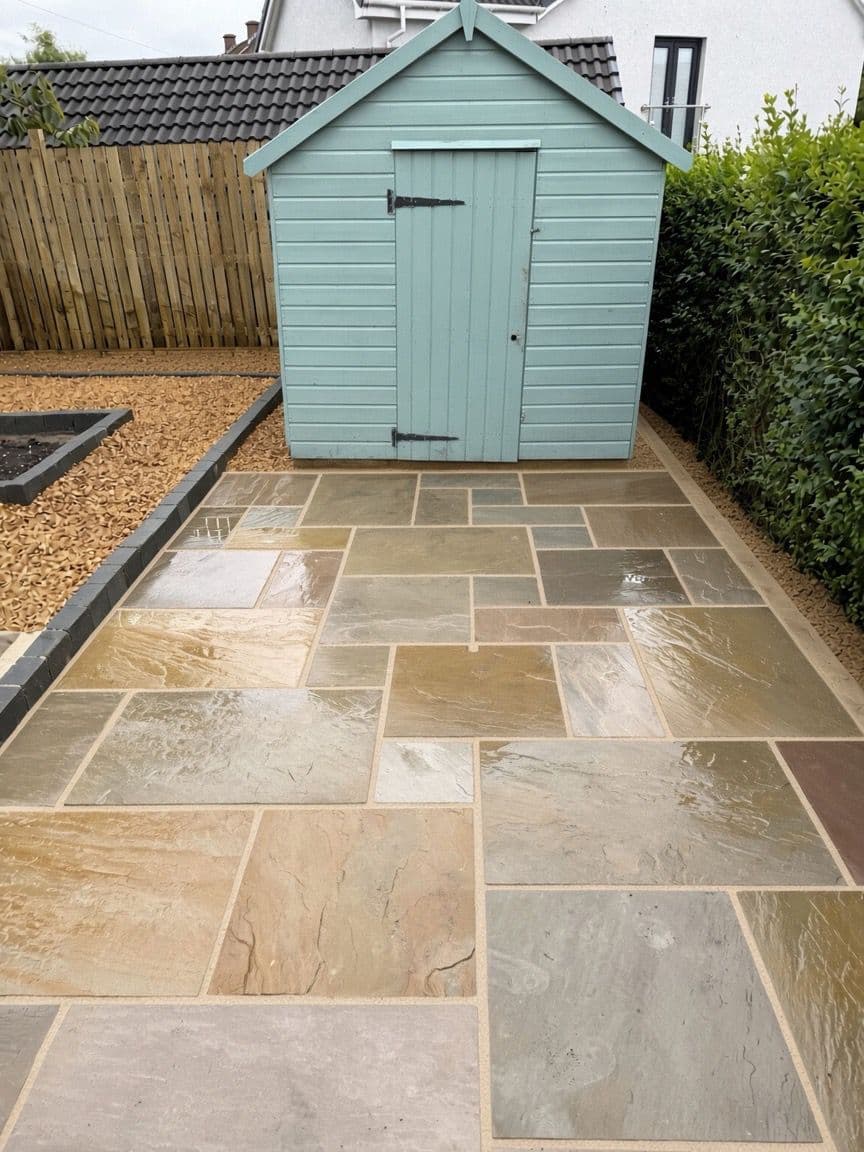
A patio is the part of a garden that gets used most and replaced least, so it is worth spending the thinking time up front. In this climate the questions that matter are not really about looks. They are about what the surface does when it is wet, which is most of the year.
Indian sandstone
The most common choice, and for good reason. It is warm in colour, varies naturally from slab to slab, works with both traditional and modern houses, and is reasonably priced. It is naturally textured so it holds grip well when wet.
The trade-off is porosity. Sandstone absorbs water, which means it takes algae in shaded spots and will stain from spills if left. It wants a wash once a year and benefits from sealing. Frost is not usually an issue with good-quality stone, but cheap thin sandstone can spall over time.
Porcelain
Porcelain is dense to the point of being effectively non-porous. It does not stain, barely grows algae, holds its colour and comes in consistent sizes with sharp edges, which gives a very contemporary finish. For a shaded patio that would otherwise be permanently green, it solves the problem outright.
It costs more, both in material and in labour, because it needs cutting with the right blade and laying on a full mortar bed with a slurry primer on the back of each slab. Skip the primer and slabs work loose within a couple of years. Check the slip rating rather than assuming: some smooth porcelain is genuinely dangerous outdoors, and you want a proper external rating.
Granite and concrete
Granite is the hardest-wearing of the lot, dense, frost-proof and essentially permanent, which suits driveways and high-traffic areas. It is the most expensive and the heaviest to work with, and the colour range is narrower.
Modern concrete paving has moved on a long way from the grey slabs people picture. It is manufactured to consistent dimensions, comes in convincing riven and textured finishes, and is the most affordable route to a large area. Colour can fade over years, and quality varies enormously between products.
“Scott provided us with a great quote and was professional, reliable and helpful throughout the whole job. The finished work looks fantastic and has completely transformed the garden. The team worked hard, kept everything tidy and paid great attention to detail.”
What matters more than the material
- A full mortar bed, not five dabs. Spot-bedded slabs sound hollow, crack under point loads and let water sit in the voids underneath.
- A compacted sub-base of adequate depth, laid in layers.
- A fall away from the house, typically around 1 in 80, so water leaves rather than pooling.
- Two courses of brick below the damp proof course. Paving laid up over the DPC bridges it and creates a damp problem indoors.
- Jointing suited to the material, brushed in and finished properly rather than left open.
Any of the four materials laid on a proper build-up will outlast the cheapest one laid badly by decades. That is the whole of it. Patio and paving work sits alongside steps, walls and edging in most projects, and it is worth planning them together. For a look at what a garden needs, arrange a free quote.
Related services
Areas this applies to
Get a free quote
Tell us where you are and what the garden needs. Quotes are given after seeing the space, so the price reflects the actual job rather than a guess.
- Call
- 07766 636189
- Message on WhatsApp
- Opening hours
- Monday to Sunday, 8:00am – 4:00pm